For those in Jaipur looking to explore this wide variety, Bottle Express brings together a world of whisky labels, offering a convenient starting point for discovering different styles and expressions. Since prices and availability vary by retailer, bottle size and variant, it is worth checking the latest MRP and stock before placing an order.
Understanding Different Types of Whisky
Before comparing brands, it helps to understand how the main whisky categories differ from each other. The category a whisky falls into says a lot about what is in the bottle and how it was made.
Indian Whisky
- Indian whisky is one of the most consumed spirit categories in the world by volume. The range is wide, from light, easy-drinking blends to more premium expressions that have started attracting international attention.
- Indian whisky is produced under domestic regulations, and some products use a base of neutral grain spirit blended with malt, while others are made entirely from malted barley in the tradition of Scotch. The label and product information will tell you which type you are looking at.
Scotch, Bourbon and Blended Whisky
- Scotch whisky must be made in Scotland, aged for a minimum of three years in oak casks and meet a specific set of legal production requirements. Single malt Scotch comes from one distillery using malted barley only.
- Bourbon is an American whiskey made from a grain mash of at least fifty-one per cent corn and aged in new charred oak barrels, which gives it a distinctly sweet, full character. Blended whisky combines grain whisky and malt whisky from multiple sources to achieve a consistent, approachable flavour that can be reproduced batch after batch.
Popular Indian Whisky Brands
Indian whisky dominates the domestic market in terms of volume and brand recognition. Most buyers have preferences within this category before they ever consider exploring imports.
Royal Stag
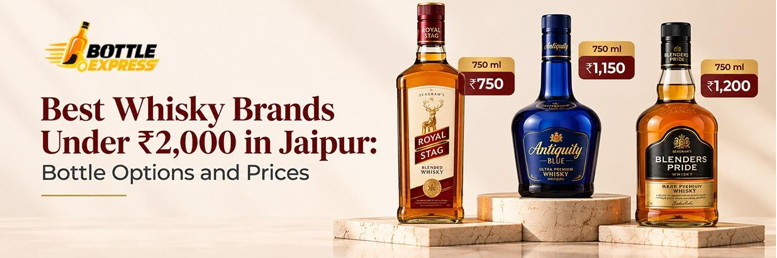
Royal Stag is one of the most recognisable whisky brands in India. It is a blended whisky positioned at the accessible end of the market and has a smooth, mild character that makes it popular for casual drinking and mixing. The grain base gives it a clean profile without strong oak influence, which is exactly what most buyers at this price point are looking for.
Blenders Pride
Blenders Pride comes a level higher than Royal Stag in terms of market positioning and is built around a blended Scotch whisky and Indian grain spirit combination. It has a more rounded, slightly fuller flavour than entry-level Indian blends, with a smoother finish. It occupies the premium Indian segment and appeals to buyers who want more character without moving to imported Scotch.
McDowell's No.1
McDowell's No.1 has one of the widest ranges of any Indian whisky brand and a presence that extends across the country. It covers multiple variants that differ quite significantly in flavour and character, so the experience from one expression to the next is not always consistent. It is worth checking the specific variant rather than going by the brand name alone.
8 PM Whisky
8 PM is a value-segment Indian whisky with broad availability. It sits at the more affordable end of the market and is primarily bought for everyday casual consumption. The flavour profile is light and straightforward, which makes it accessible for buyers who are not looking for complexity in the glass.
Amrut Indian Single Malt
Amrut is the brand that put Indian single malt whisky on the international map. Produced in Bangalore, it uses 100% Indian malted barley and ages in oak casks under conditions that accelerate maturation because of the climate. The result is a spirit with more maturity than its age statement might suggest. Amrut has won international recognition and appeals to buyers who want a genuinely complex Indian whisky rather than a blend.
Popular International Whisky Brands Available in India
Imported whisky carries duties and taxes that push prices higher than the domestic equivalent, but demand has remained strong across the premium and super-premium segments.
Johnnie Walker
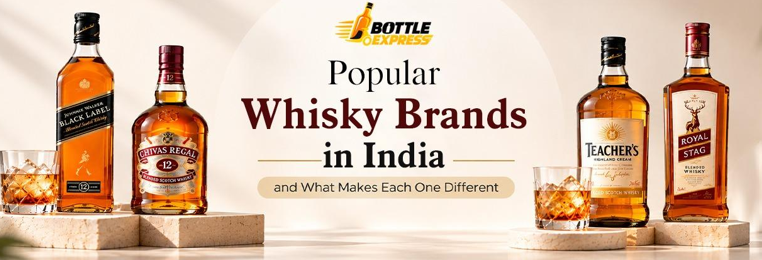
Johnnie Walker is the most widely recognised blended Scotch whisky brand in the world and covers the broadest range of any imported brand available in India. Red Label is the entry point, followed by Black Label, Double Black, Green Label, Gold Label Reserve and Blue Label, each representing a different blend and level of complexity.
Black Label is the most popular variant in India, with a balanced, slightly smoky character built around whiskies aged a minimum of twelve years.
Chivas Regal
Chivas Regal is a blended Scotch whisky known for a softer, more approachable style than some of its peers. It is built around honey, dried fruit and light oak notes rather than heavy peat or smoke, which makes it a comfortable introduction to premium Scotch for buyers who find bolder styles too sharp.
The 12-year and 18-year expressions are the most widely available in India, with the 18-year showing considerably more depth and richness. The scotch whisky price in Jaipur for Chivas varies by variant and bottle size, so confirming the exact product before ordering is worth doing.
The Glenlivet
The Glenlivet is one of the most recognised single malt Scotch whiskies globally and an entry point into the category for many buyers. It is produced in the Speyside region of Scotland and is known for a fruity, floral, approachable character rather than the peaty or maritime styles associated with other regions. The 12-year is the most common expression in India and suits buyers who want to explore single malt without committing to a strongly flavoured bottle.
Jack Daniel's
Jack Daniel's is a Tennessee whiskey rather than a bourbon or a Scotch, though the distinction matters. It uses a charcoal mellowing process called the Lincoln County Process before the spirit goes into the barrel, which gives it a notably smooth, slightly sweet character.
It is made from a corn-heavy grain mash and aged in new charred oak barrels. The Old No. 7 is the most widely available expression in India, and Honey and Tennessee Apple are among the flavoured variants that have grown in popularity.
Jameson
Jameson is an Irish whiskey and falls in a distinct category from both Scotch and American whiskey. Irish whiskey is typically triple-distilled, which produces a notably smooth and light spirit. Jameson uses a blend of pot still and grain whisky, giving it a slightly fruity, mild character with very little of the sharpness or smoke that some buyers associate with Scotch. It has grown steadily in India, particularly among buyers who prefer a lighter, more approachable imported option.
What Makes Each Whisky Brand Different?
Brand names are the start of the comparison, not the end of it. The differences that matter are in the production decisions made before the bottle reaches the shelf.
Ingredients and Production Methods
The grain used in production sets the foundation. Malted barley gives single malt its distinctive character. Corn produces the sweeter, fuller profile associated with bourbon. Blended whiskies combine grain and malt in proportions that the blender adjusts to hit a consistent flavour target. Fermentation time, still type and distillation strength all influence the spirit that comes off the still before ageing even begins.
Ageing and Cask Selection
Oak cask ageing is where most of the colour, aroma and flavour complexity in whisky comes from. New charred oak barrels contribute stronger vanilla and wood notes. Ex-bourbon barrels are softer. Ex-sherry casks add dried fruit and spice. The climate during ageing matters too.
- Indian single malts age faster because of higher temperatures, which means a younger Indian whisky can develop complexity comparable to an older Scotch.
- Age statements on the label apply to the specific product and not to every expression from the same brand.
The blended Scotch whisky price in Jaipur also reflects ageing, with older age statements generally commanding a higher retail price.
Flavour Profile and Price Segment
Indian blends tend toward lighter, cleaner and milder profiles. Premium Scotch adds oak, dried fruit, honey and sometimes smoke. Bourbon brings sweetness and vanilla. Irish whiskey leans smooth and light. Price is shaped by production cost, import duties, state-level excise and the retailer's margin, which is why the same bottle can cost noticeably different amounts from one city to another.
How to Compare Whisky Brands in India
Always look at the specific variant rather than the brand name. Johnnie Walker Red and Johnnie Walker Blue are made differently and priced very differently. The same logic applies to McDowell's or any brand with a wide range.
- Check the bottle size, the stated alcohol content and whether an age statement is on the label.
- Compare MRP and confirm whether the price includes state taxes or is pre-tax, because this affects what you actually pay.
- State excise policies vary enough across India that the same bottle can differ by several hundred rupees depending on where you buy it.
Checking Whisky Availability in Jaipur
Rajasthan has its own excise rules and pricing, which means availability and MRP in Jaipur will not always match what you see quoted elsewhere. Order whisky online in Jaipur through Bottle Express to check which brands and variants are currently listed, along with their prices. Stock changes, so confirming availability before you finalise an order saves time. Liquor home delivery in Jaipur through Bottle Express is subject to current operating hours, delivery area coverage and applicable local regulations. Age verification is required at delivery.
Conclusion
The whisky category in India covers more ground than any other spirit. Indian blends, domestic single malts, imported Scotch, Tennessee whiskey and Irish whiskey all have distinct production stories behind them that explain why they taste different from each other. Comparing by variant, checking bottle size, reading age statements where available and verifying MRP gives you a far clearer picture than brand recognition alone. For current whisky listings and availability in Jaipur, Bottle Express is a local option worth checking before you place an order.
Questions people ask
Which whisky brands are popular in India?
Royal Stag, Blenders Pride, McDowell's No.1 and 8 PM lead the Indian segment by volume. On the imported side, Johnnie Walker, Chivas Regal and Jack Daniel's have the strongest presence.
What is the difference between Indian whisky and Scotch whisky?
Scotch must be produced in Scotland and aged for a minimum of three years under strict legal rules. Indian whisky is produced under domestic regulations and may use neutral grain spirit as a base in blended products.
Is single malt whisky different from blended whisky?
Single malt comes from one distillery and uses only malted barley as the grain. Blended whisky combines grain and malt whiskies from multiple sources.
Why do whisky prices vary across Indian states?
Each Indian state sets its own excise duty, taxes and distribution policies. Retailer margins and distribution costs also contribute.
Does an older whisky always taste better?
Not necessarily. A heavily peated young Scotch can be far more enjoyable to some buyers than an aged expression with oak-forward flavours. Age statements are a useful guide, not a guarantee of preference.